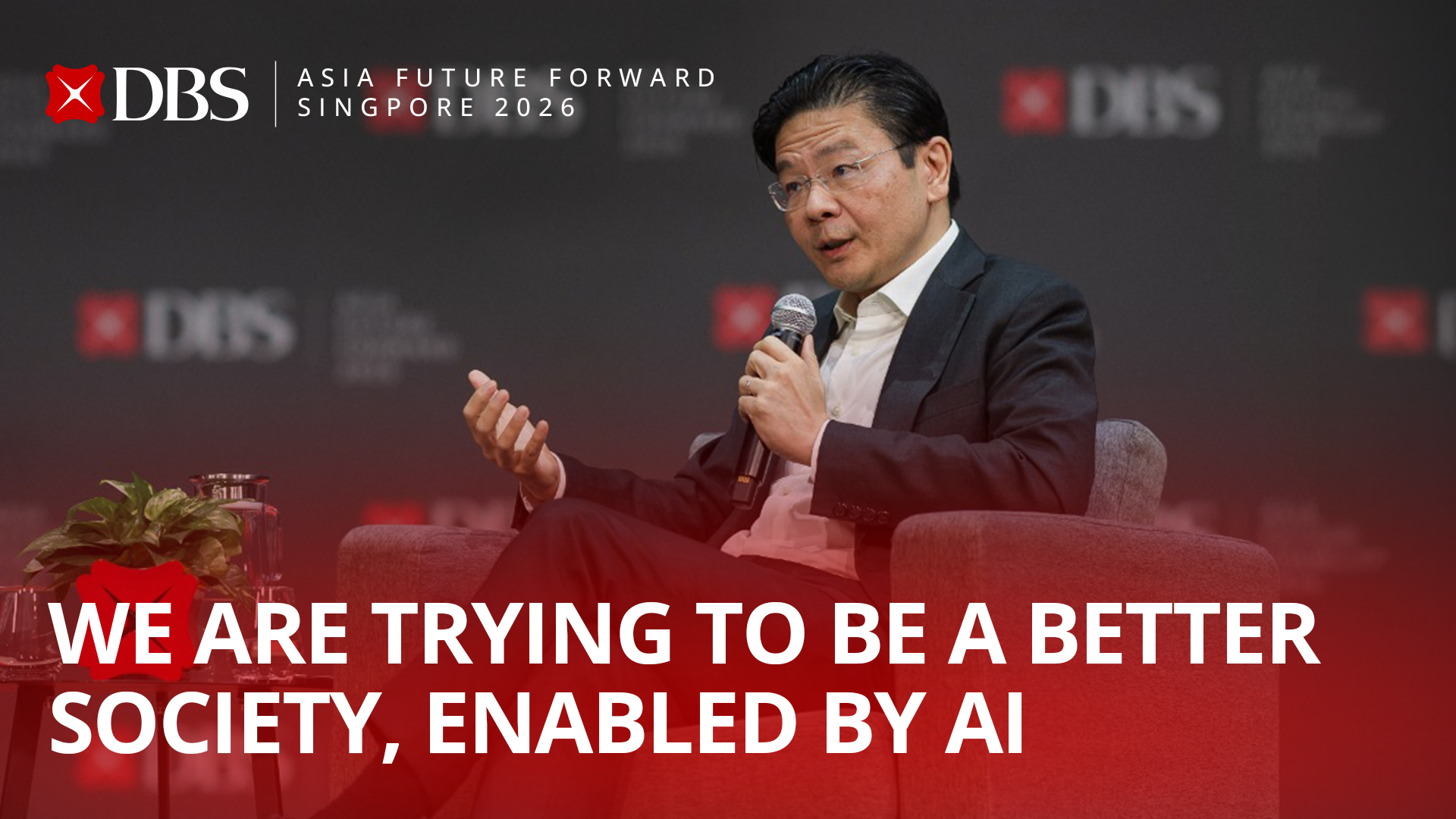
At the inaugural DBS Asia Future Forward Conference, Tan Su Shan called on leaders to take an active role in shaping Asia's future amid rapid technological, geopolitical and market change. Asia enters this period from a position of strength, supported by its demographics, technology ecosystem, supply chains, growing capital markets and wealth creation.
Yet the region must navigate a world marked by volatility, fragmentation and a series of paradoxes. The pursuit of technological sovereignty still depends on global cooperation; greater digital connectivity has not necessarily created stronger human connection; and access to AI-driven knowledge could deepen inequality if its benefits are not widely shared.
Against this backdrop, Asia's opportunity lies in combining connectivity, pragmatic innovation and trust. This means strengthening regional links, redesigning work rather than simply adding AI to existing processes, opening capital markets and grounding AI in robust governance and human judgement.
Singapore can play an important role as a neutral, transparent and connected hub between East and West. Ultimately, technology may influence the future, but people must decide how it is used. This human-centred conviction underpins DBS' ambition to become an AI-enabled bank with a heart.
Generated with the support of AI and reviewed by an editor.Download transcript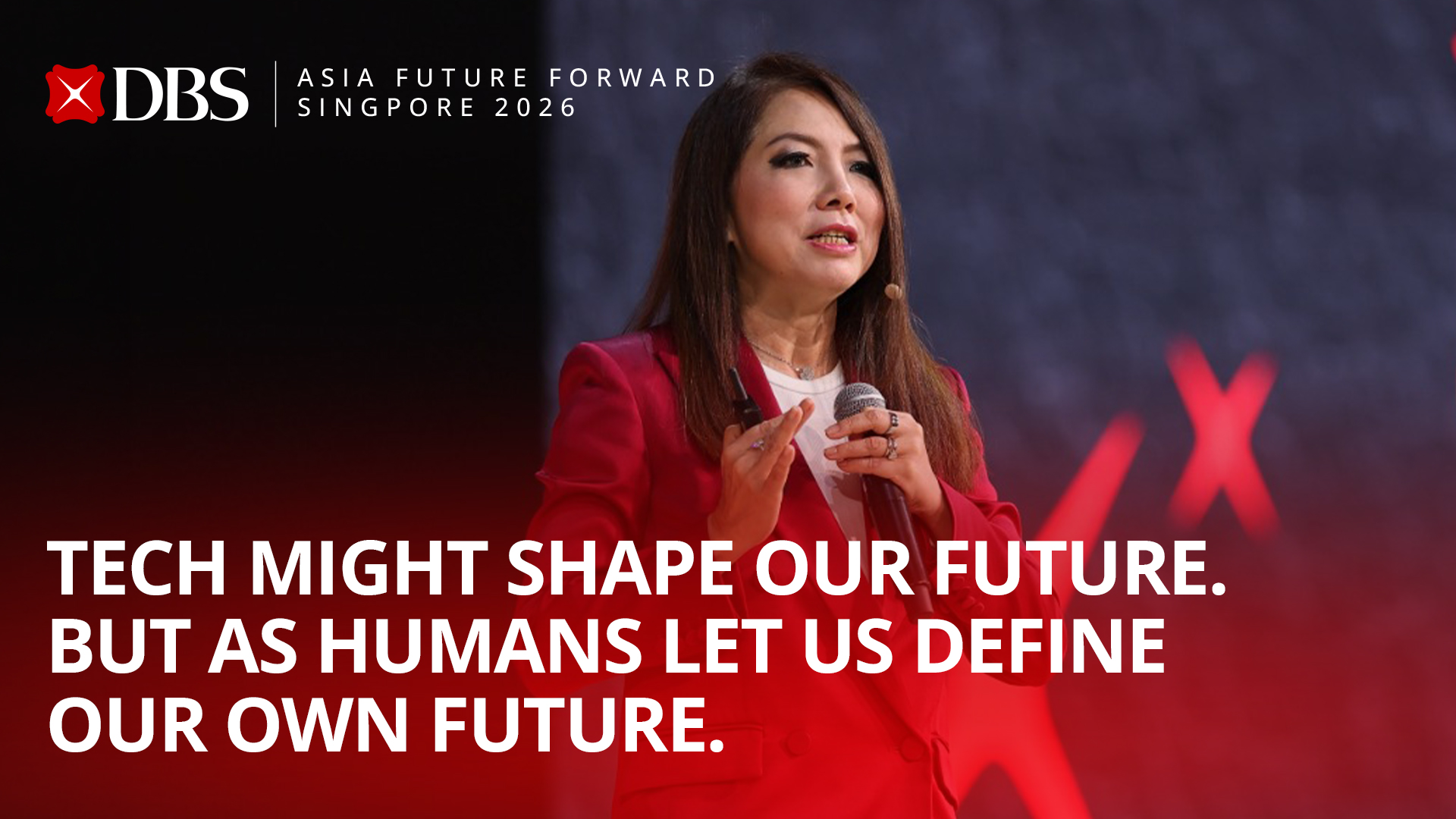
As AI becomes more capable, Shou Chew and Shee Tse Koon explored how people can grow alongside it. Human judgement, creativity, relationships, curiosity and purpose will become more important as machines take on a wider range of tasks.
Realising AI's potential, however, requires a balanced view of both its immediate impact and longer-term possibilities. AI's short-term impact may be overestimated, while its long-term potential may be underestimated. Although it can automate routine work, high-stakes and differentiated decisions still call for human involvement, verification and accountability.
The immediate opportunity is for people to become curious, hands-on users who understand AI through experience. Across content creation, safety, engineering and science, AI can improve productivity and expand what individuals and organisations can achieve.
Realising this potential will require stronger education, cybersecurity and clear boundaries for responsible use. AI can transform industries, including banking, by enhancing efficiency and improving customer experiences, but its integration must remain centred on people. Ultimately, the question is not what AI will do to people, but what it can do with and for them
Generated with the support of AI and reviewed by an editor.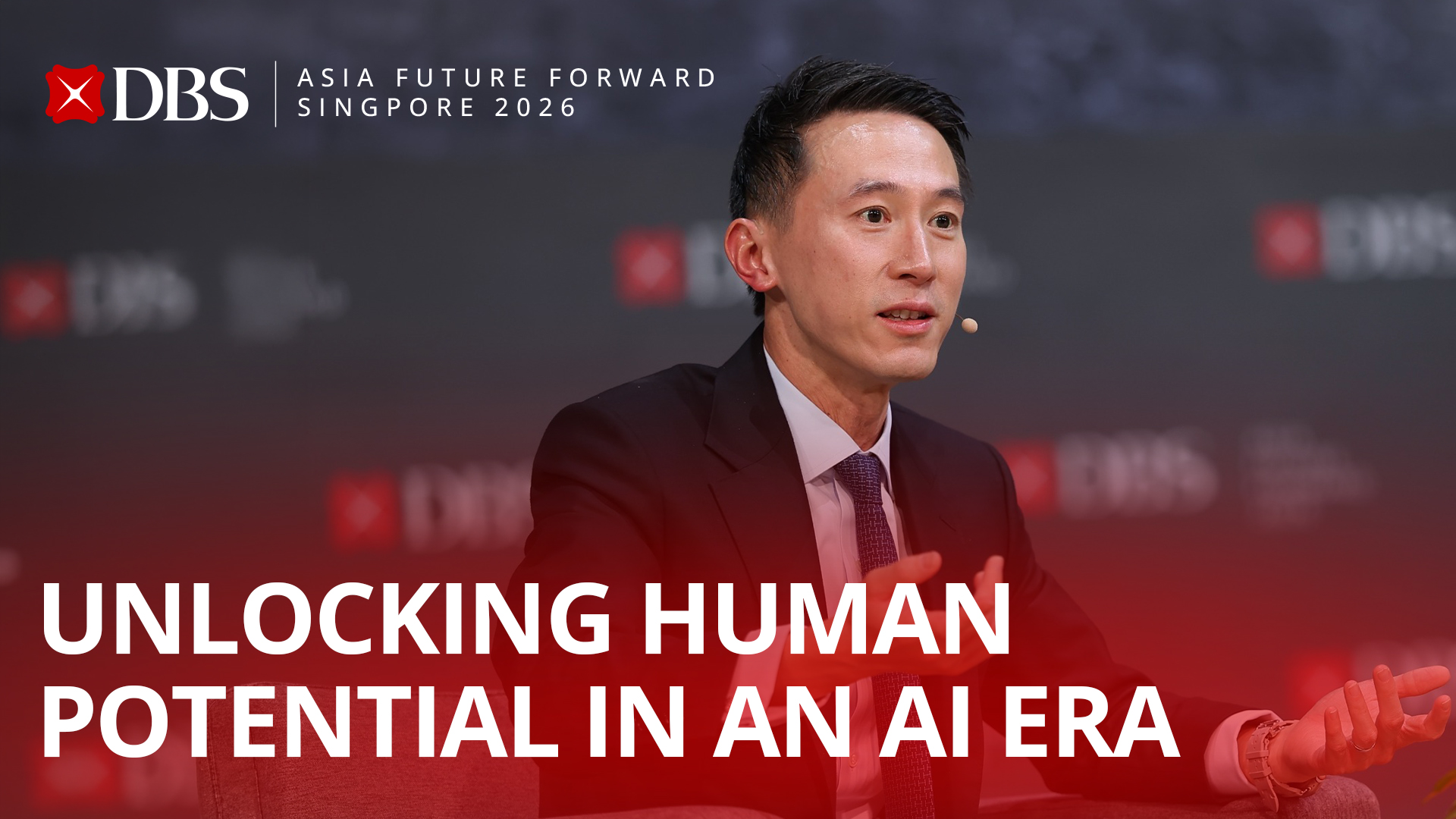
As AI moves from the digital into the physical world, Yifan “David” Li explored how general-purpose robots could reshape daily life and industry. Rather than replicate human appearance, humanoid robots are designed for human environments, allowing them to use existing tools and undertake a broad range of tasks.
Bringing this vision to life, however, requires physical AI to overcome challenges that digital AI does not face. Robots require advanced hardware, tactile sensing and large volumes of real-world training data to handle objects and environments with human-like dexterity. These foundational capabilities remain underdeveloped, constraining their intelligence and usefulness.
Against this backdrop, the opportunity lies in creating a unified, general-purpose design that can scale across homes and industries. By performing complete, multi-step processes without requiring environments to be modified, robots could extend automation into varied tasks that specialised machines cannot address.
The broader promise of physical AI is not to replace people, but to free them from repetitive and time-consuming work. The robots are here to help us become lazy. By making robots genuinely useful, the technology could return time to people, creating greater space for the activities and relationships that matter most.
Generated with the support of AI and reviewed by an editor.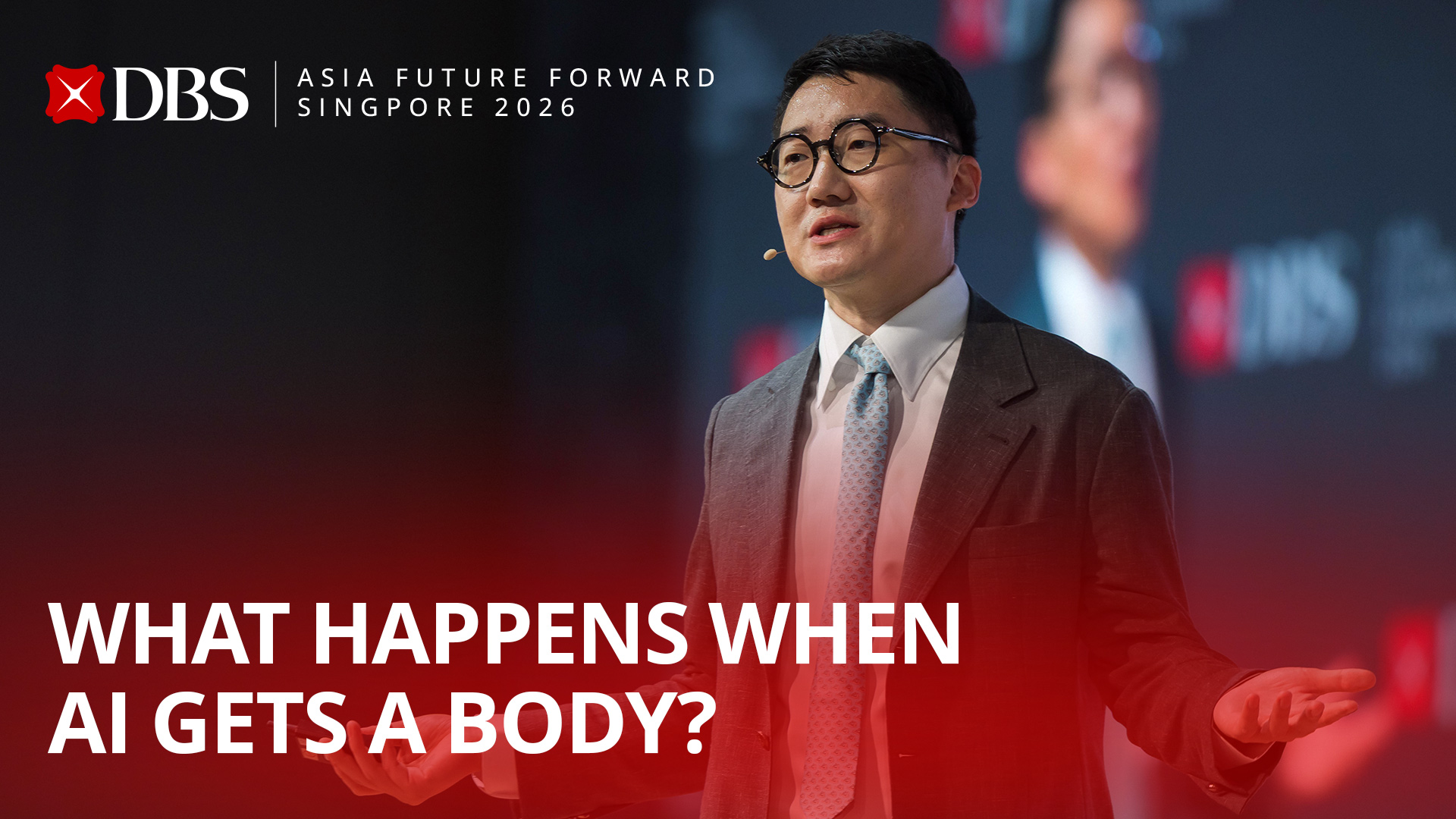
As AI evolves from experimentation to enterprise deployment, the panel explored what will distinguish effective AI leadership. Competitive advantage will come not from having the biggest or most advanced model, but from deploying the right intelligence against meaningful business challenges.
This shift is changing how organisations approach their AI strategies. Rising costs, dependence on proprietary providers and rapidly evolving models are driving interest in open-weight, sovereign and smaller models that offer greater control, portability and adaptability.
The opportunity lies in combining these models with proprietary data, business context and redesigned processes. AI transformation must be led by the business, with employees using and shaping the technology directly, while flexible infrastructure enables organisations to adopt better models as they emerge.
Ultimately, AI leadership is measured by useful, reliable deployment rather than technological ambition alone. Organisations must begin building their capabilities now, while retaining the human judgement needed to recognise errors, guide decisions and ensure that AI creates value for businesses and society.
Generated with the support of AI and reviewed by an editor. From left: Sara Hooker, Richard Tong, Linda Sheng and Derrick Goh
As technological change accelerates beyond organisations' ability to absorb it, Salim Ismail challenged leaders to rethink how corporations are designed. Traditional organisations optimise for efficiency, predictability and risk control, but today's environment demands greater flexibility, adaptability and speed.
The central tension is that organisations are built to resist the disruption they now need to embrace. Many AI initiatives merely accelerate existing human-to-human processes and bottlenecks, leaving underlying workflows unchanged. As the external world moves faster than the organisation, established structures, planning cycles and decision-making models become barriers to transformation.
The opportunity lies in redesigning corporations around intelligence rather than inserting AI into legacy systems. Salim Ismail proposed creating an AI-native operation at the organisation's edge, where teams can rebuild and test workflows safely before migrating them into the core. Human oversight would sit above the system, supported by governance, traceability, evaluation and rollback mechanisms.
This transformation is ultimately a leadership and mindset challenge. Organisations must become faster learners, create room for unconventional ideas and let purpose guide them through uncertainty. Those that successfully combine machine intelligence with human judgement could unlock new levels of productivity while giving people more time for creative, strategic and meaningful work.
Generated with the support of AI and reviewed by an editor.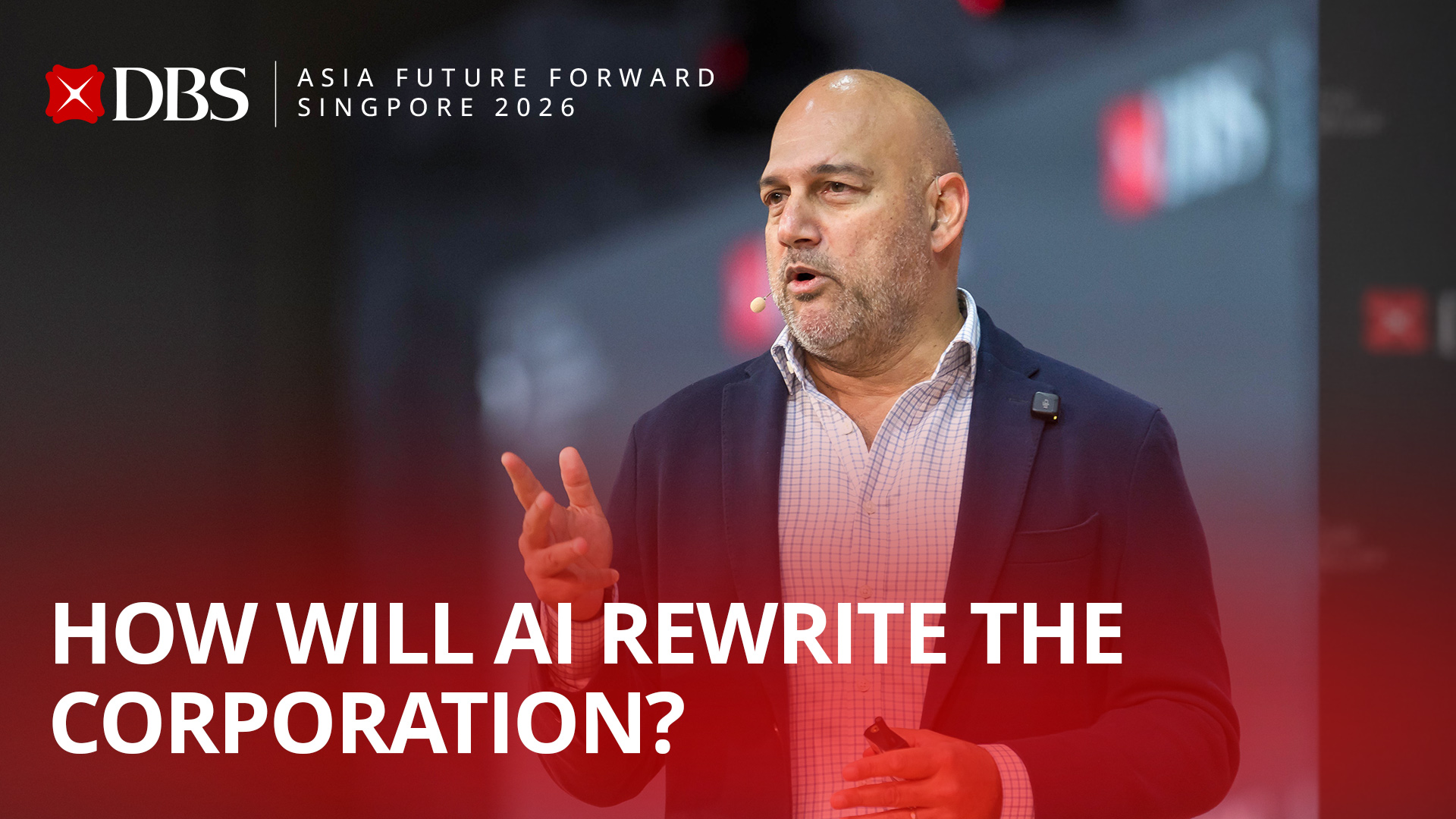
As investment in AI infrastructure accelerates, Hock Tan and Lip-Bu Tan examined whether today's spending reflects sustainable demand. Both expect demand for computing capacity to continue exceeding supply in the near term, fuelled by the shift from model training towards inference, agentic AI and physical AI.
The expansion will depend on the industry overcoming a succession of constraints, from memory, substrates and power to talent and capital. While individual supply bottlenecks may ease, the longer-term question is whether AI can spread through businesses and society quickly enough to generate returns that justify continued investment.
The next wave of value is likely to move beyond infrastructure towards frontier models, applications and enterprises that translate AI into viable use cases. As workloads become more specialised, different combinations of CPUs, GPUs, custom accelerators, memory, connectivity and software will be needed to improve performance, energy efficiency and cost.
For business leaders, the imperative is to focus on outcomes rather than exuberance, using AI to redesign workflows, create new business models and deliver measurable value. In an uncertain and fast-moving market, success will also require thoughtful decisions, strong partnerships and the humility to recognise how much remains unknown.
Generated with the support of AI and reviewed by an editor.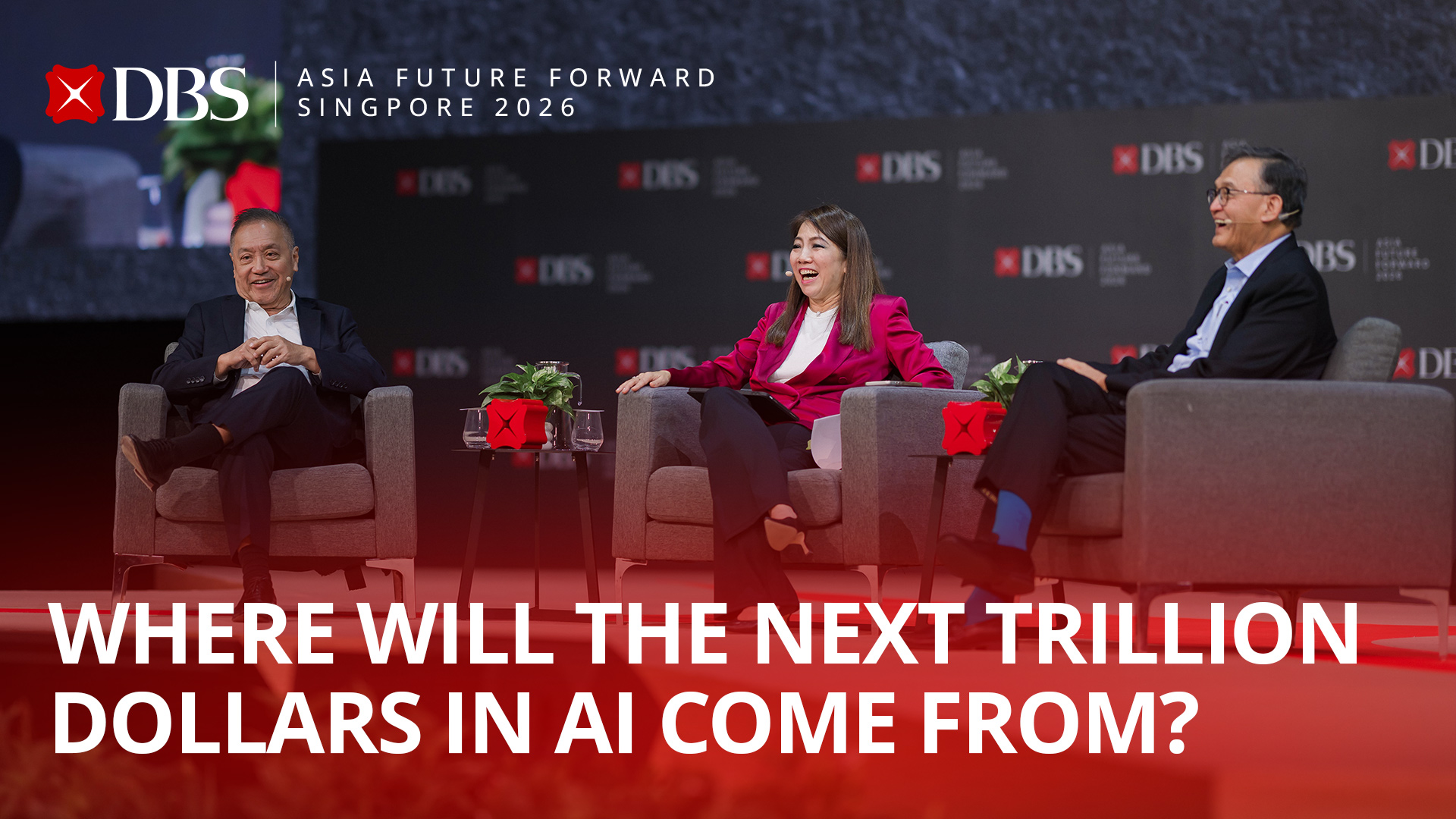
Capital flows in the Age of AI
Pandu Patria Sjahrir | Chief Investment Officer, Danantara Indonesia
Jenny Johnson | CEO, Franklin Templeton
Jenny Lee | Senior Managing Partner, Granite Asia
Timothy Adams | President & CEO, Institute of International Finance (IIF)
Moderated by Han Kwee Juan | DBS Bank
As investment in AI infrastructure accelerates at unprecedented speed and scale, the panel examined how capital is being mobilised and where value may ultimately emerge.
Global spending on AI and data centres is projected to reach US$6.5 trillion by 2030, with capital formation beginning to spread from the United States to emerging markets across Asia and beyond. The scale of the build-out is striking. AI and data-centre investment reached approximately 4.8% of GDP within three years, compared with around 7% over 22 years for US railroads and 5% over 25 years for mobile infrastructure.
This rapid expansion raises questions about debt exposure, technological obsolescence, energy availability, environmental impact and whether the infrastructure will create broad economic and societal value. History also suggests that building infrastructure does not guarantee capturing its greatest rewards. Railway shippers and merchants, followed by internet platforms, ultimately captured more value than the companies that built the underlying networks. Whether AI will follow the same pattern remains open, particularly as today's infrastructure providers may also own the models and applications.
For Asia, the opportunity lies in directing capital beyond infrastructure towards the businesses and applications it enables. AI is lowering the cost of entrepreneurship, helping established companies combine proprietary data with industry expertise, and creating new possibilities across scientific research, healthcare, mobility and robotics. Realising this promise will require investors, enterprises and governments to prioritise useful, inclusive and sustainable outcomes.
Generated with the support of AI and reviewed by an editor.
Against a backdrop of profound global change, Singapore Prime Minister and Minister for Finance Lawrence Wong reflected on how Singapore can navigate a shifting world order and the rapid advancement of AI.
While a more fragmented international environment brings greater uncertainty, countries and businesses retain the ability to strengthen their resilience, invest in new capabilities and deepen cooperation with trusted partners.
For Singapore, the path forward is to embrace AI while competing on its strengths: stability, trust, connectivity and high-value capabilities. By building ecosystems that unite global and local companies, research, talent and regional partnerships, Singapore can remain relevant and serve as a connector to opportunities across Asia.
This ambition must be pursued with clear guardrails. Safety and security cannot be compromised, humans must retain responsibility for critical decisions, and technological progress must create broad-based benefits. As AI takes over routine work, employers must also preserve the learning, mentorship and judgement that enable the next generation to develop.
Ultimately, Singapore's aim is not to become an AI-driven society, but a better society enabled by AI. Managing this transition may take more effort, but it offers a more sustainable path: one that helps workers adapt, keeps Singapore open to global systems and ensures technology improves lives without leaving people behind.
Generated with the support of AI and reviewed by an editor.View transcript