How We Can Age Well: Five Hard Questions from the DBS Foundation Impact Beyond Dialogue
Asia is home to nearly 600 million seniors in 2024 – and this number is set to double by 2050, forming the majority of seniors on the planet. People are living longer than ever, and the idea that many of us will live extended lifespans will also make us ponder on what it will take to truly age well.
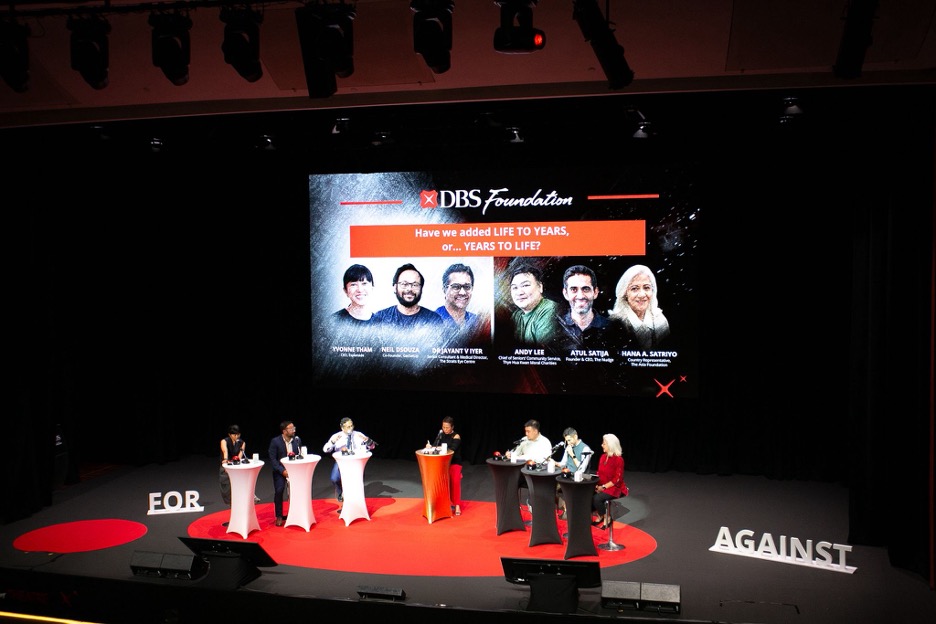
To explore the crucial aspects of optimising longevity, DBS Foundation recently held its Impact Beyond Dialogue at ITE College Central on November 7. This event brought together policymakers, entrepreneurs, academics, and community leaders around the region as they examined a quieter truth: progress has made us live longer, but not necessarily better.

Through a series of three Future Labs followed by a spirited debate, the Impact Beyond Dialogue convened more than 500 participants across Asia – including 300 attendees at ITE College Central, and close to 250 viewers who tuned in via LinkedIn Live.
As ageing is a complex and multi-faceted issue, the Dialogue explored three opportunity areas across ageing spanning across three Future Labs: Staying Physically and Mentally Resilient, Building Financial Resilience and Social Connectedness and Purpose. The conversations and exchange of ideas all culminated in the highlight of the Dialogue – The Big Debate, where speakers battled head-to-head with the motion: Have we added life to years, or just years to life?
1. Who gets to age well?
Longevity does not guarantee wellness. As Dr. Mary Ann Tsao, Chairwoman and Founding Director of Singapore-based charity Tsao Foundation observed, education and income have shaped who benefits most from longer lives. Each generation is healthier and better informed, yet gaps persist, especially among women with low financial literacy.
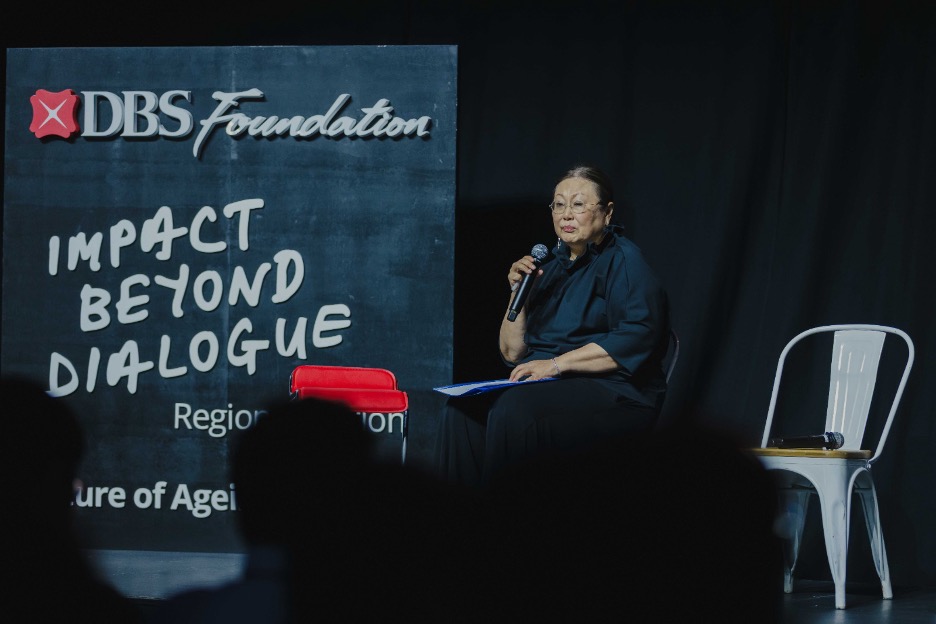
Others, like the Agency for Integrated Care’s (AIC) Assistant Chief Executive Chern Siang Jye, challenged the idea that health is only for the wealthy. Purpose, friendship, and moderation, he said, matter more than money.
“(Ageing) is really about having a sense of purpose: being able to move independently, to have autonomy in what you want to do. Many of these are not the preserve of the rich.” — Chern Siang Jye, Assistant Chief Executive, Agency for Integrated Care (AIC)
“Those who are financially resilient (and thus can age well) are often those with access to self-directed financial education, have the right attitude and mindset, and enjoy abundant social interactions and collaborations.” — Choy Siew Kai, Stanford Longevity Fellow
"In Singapore, it's our favourite pastime to complain, to lament. But deep down, we know, compared to 20 years or 30 years, 50 years ago, we are living better lives than we have ever done. Sure, don't get sick, but if you get sick, this is the best time to get sick." — Dr Jayant V Iyer, Senior Consultant and Medical Director, The Straits Eye Centre
2. As lifespans stretch, so do careers. But at what cost?
As careers stretch across longer lifespans, the definition of work is shifting. Speakers warned that opportunity and fatigue may arise.
ITE Chief Executive Officer Low Khah Gek pushed for new learning models that build curiosity and resilience for a world where people may change jobs and industries multiple times. “I need my students to think long-term and understand the reality of working,” she said, calling for cross- disciplinary learning and multi-generational workplaces.
For He Ruiming, co-founder of The Woke Salaryman, this new future demands a fundamental reevaluation of work and a redefinition of success beyond property and pay cheques. “Young people need to learn from their parents’ mistakes… Live within your means, invest earlier, and work for a purpose, not just to pay off a 5-room (HDB) flat,” he said.
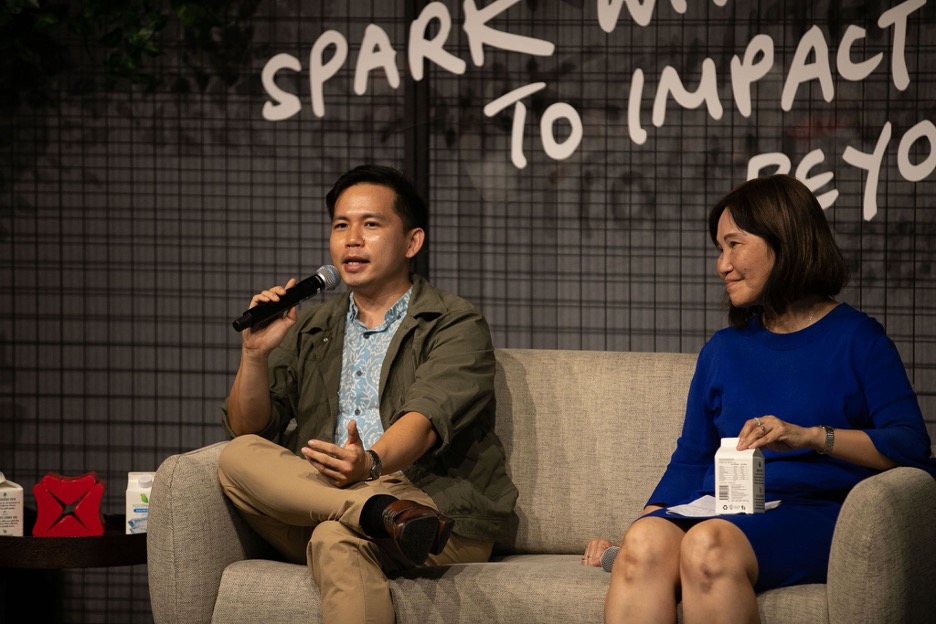
"I think financial institutions have a critical part to play in financial literacy. Very often, our mission and our purpose is to enable the financial well-being of our customers. So being involved in driving and facilitating financial literacy and planning is very natural for us to do." — Chen Ze Ling, Managing Director, DBS and Board Member, DBS Foundation
“Seniors are not retired, they are tired… There is a loss of purpose when the elderly become unemployed, especially in an Asian context where many people’s identities are tied with their jobs.” — Andy Lee, Divisional Director, Thye Hua Kwan Moral Charities Seniors' Community Services
3. Can technology and AI cure the loneliness epidemic?
Technology and AI promise connection but often deepen the divide. A poll conducted at the Dialogue showed participants split over AI companions: 38 per cent were comfortable, 32 per cent undecided, and 30 per cent uncomfortable. Panellists agreed that digital tools should enable, not replace, human contact. James Tan, Chief Executive Officer of TOUCH Community Services, said that AI could support care only if there were safeguards to preserve dignity and agency.
“AI itself is definitely an enabler, but I don’t want the relationship to be replaced… We need safeguards, because we’re dealing with a vulnerable population.” — James Tan, Chief Executive Officer, TOUCH Community Services
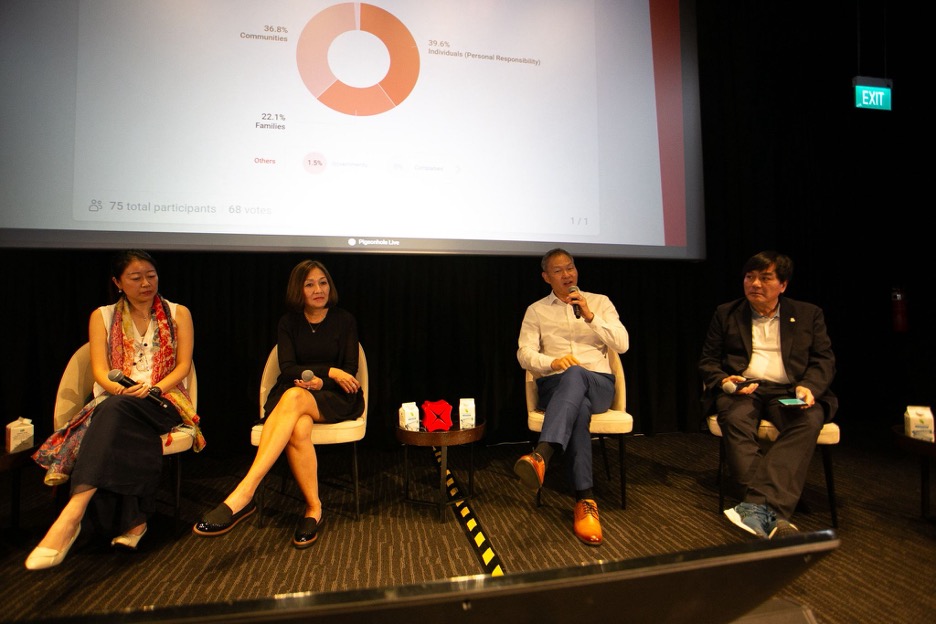
“Nothing beats a human being talking to each other than talking to a machine.” — Edna Leong, Executive Director, RSVP Singapore (The Organisation of Senior Volunteers)
4. Who should care about ageing?
Ageing is everyone’s problem, from policymakers to the young who will one day become caregivers themselves. Dr. Mary Ann Tsao reminded participants at a Future Lab that very likely, everyone will become a caregiver at some point, and often without realizing it.
DBS Singapore’s Country Head Lim Him Chuan and AIC’s Assistant Chief Executive Chern Siang Jye both stressed that governments can create the environment for healthy ageing, but only individuals can find meaning within it.
In short, it’s not someone else’s problem; it’s everyone’s challenge.
“I don’t think we want to ask the government to create a sense of purpose for people… The people who are most in control are each and every one of us.” — Chern Siang Jye, Assistant Chief Executive, Agency for Integrated Care
“Consider Japan, whose population today is 125 million. By 2050, it is set to shrink to 75 million people. How are they going to survive as a country, because their infrastructure was not built for an ageing population? So ageing is something that everybody has to think about.” — Andy Lee, Divisional Director, Thye Hua Kwan Moral Charities Seniors' Community Services
5. What does it mean to live meaningfully longer?
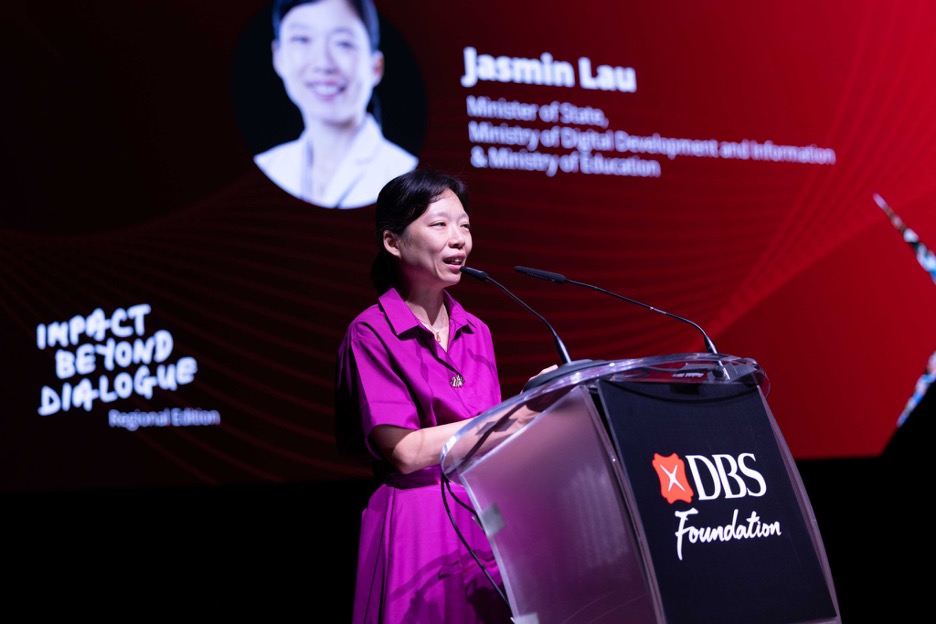
If longevity is the new norm, then purpose may be the new healthcare. Across the Dialogue, speakers brought up one recurring idea: ageing well is not simply about living longer but living with meaning. From volunteering to lifelong learning, purpose emerged as the thread connecting health, work, and community. Minister of State, Ministry of Digital Development and Information & Ministry of Education, Jasmin Lau put it simply: “Maybe we don't have to live that long, so long as we lead meaningful lives.”
Edna Leong and Dr. Carol Ma shared stories of seniors who found joy and strength again by giving back, showing that fulfilment and not just survival is the real goal. Zac Toh, founder of social enterprise City Sprouts, explained that social connection keeps the mind active. His business empowers seniors by giving them a platform to share their skills and knowledge with others.
“We need the ability to look beyond someone’s being ‘old’ — they have plenty of love, wisdom, and life experiences to share.” — Max Maeder, National kitefoiler and DBS brand ambassador
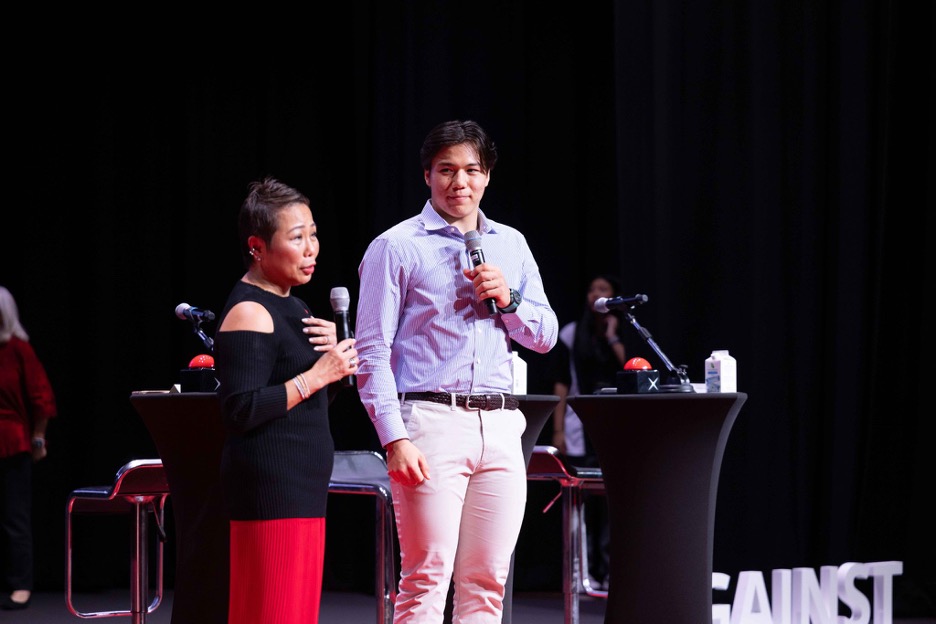
“Every extra decade we live creates a new market, it creates a new workforce, and it creates new wealth... We are not really running out of money. We are running out of imagination for what ageing can really be.” — Neil Dsouza, Co-Founder, GetSetUp
"How are you preparing for retirement beyond just monetary happiness? If you don't do that, then whatever monetary means you have will not make you a happy person." — Lim Him Chuan, Country Head, DBS Singapore
Conclusion
To age well, societies must close the health gap, redesign work, use technology wisely, share the load
of care, and above all, rediscover purpose. As the Head of DBS Foundation Karen Ngui summed up: “Ageing
is a complicated thing. You can't just look at one thing and not the other --- it's all
interconnected. For us to address this interconnectedness, we need to look at all aspects of life. Not
just physical health, not just mental health, but also social and emotional health and financial
health."
Living longer may be marked progress but living well will be the true achievement.
Keen to learn more?
Visit the DBS Foundation website to explore our initiatives. Find out more or follow us on LinkedIn to stay up to date with our latest news!