Humans and Agentic AI: Redefining KPIs in the Age of Co-Creation
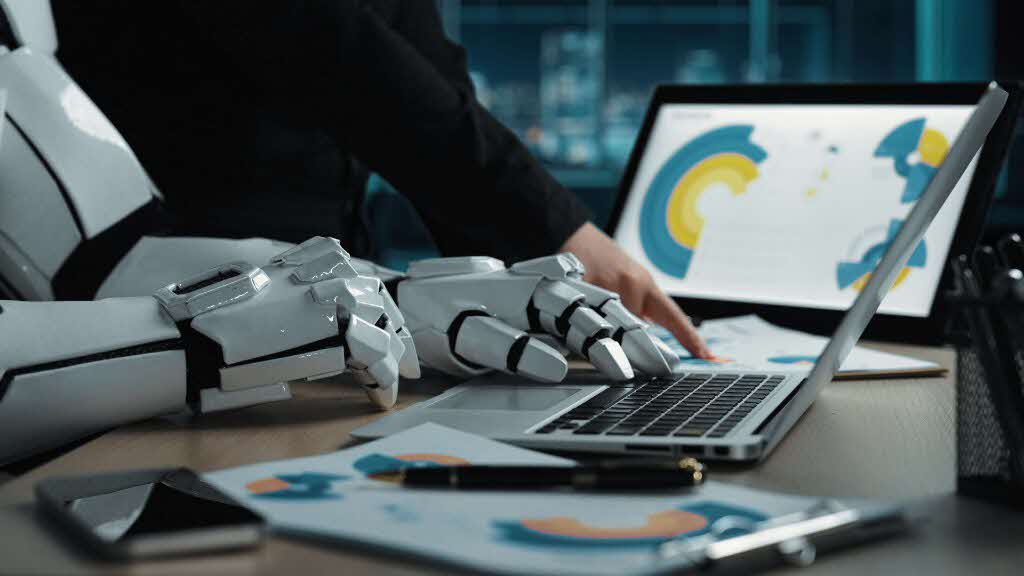
We are entering an era where humans and intelligent agents will not only co-exist but also co-create, collaborate, and yes, sometimes compete. This demands a fundamental reimagination of how we measure contribution, performance, and growth.
For decades, Human Resources (HR) KPIs have centered on metrics like engagement, retention, productivity, and learning agility. But now, with the rise of agentic AI resources, AI agents that learn, reason, and act autonomously, we're entering a world where HR must adapt its lens from human capital management to hybrid intelligence orchestration.
1. The Traditional HR KPI Universe
Human KPIs have always balanced efficiency and empathy:
- Engagement and Retention: How inspired and emotionally connected are our teams?
- Productivity and Output: How effectively do they translate effort into value?
- Learning Agility: How quickly can they adapt to new technologies, roles, or goals?
- Collaboration and Innovation: How well do they leverage collective intelligence?
These metrics drive human potential, but they assume cognition is uniquely human.
2. The AI Agent KPI Universe
AI agents require a different dashboard:
- Autonomy Index: How effectively can the agent make context-aware decisions without human intervention?
- Accuracy and Reliability: How consistently does the agent achieve the desired outcome?
- Adaptability and Learning Speed: How fast does it retrain or adjust models to evolving data?
- Ethical and Compliance Alignment: Does it act within organizational and regulatory boundaries?
- Explainability: Can its decisions be traced and understood by human supervisors?
In a sense, the AI agent's KPIs resemble a mirror image of ours, only faster, more data-driven, and infinitely scalable.
3. When Humans and Agents Collaborate
The most powerful metric ahead will not measure humans or agents individually, but synergy. How well do they amplify each other’s strengths? Imagine measuring:
- Cognitive Collaboration Index – quantifying the value created when human creativity and AI precision merge.
- Trust Velocity – how quickly teams develop trust in AI recommendations.
- Outcome Diversity – the range and novelty of ideas co-produced by human–AI pairs.
4. Change Management: Leading Both Humans and Algorithms
Here's the delicate balance:
- Humans fear replacement, while AI systems require reinforcement (feedback loops).
- Humans learn through emotion and narrative, while AI learns through data and iteration.
- Human change journeys need psychological safety, while AI evolution needs governance and retraining.
Leaders must design environments where humans don't feel devalued and AI doesn't operate unchecked. Change management must evolve to include empathy for humans and transparency for machines.
5. The Call to HR and Tech Leaders
The question is not “Will AI take jobs?” but rather “How will we redesign KPIs to measure collective intelligence?”
As leaders, we need to:
- Rethink performance systems to include machine-human collaboration metrics.
- Create ethical feedback loops that train both humans and algorithms.
- Build culture models where curiosity, adaptability, and responsible AI usage are celebrated KPIs.
And as technology leaders, we must ensure our agentic systems are not only efficient but also aligned with human values. So, our future workplace feels less like a competition, and more like a collaboration between consciousness and computation.
Closing Thought
The future belongs to organizations that can measure what truly matters, not the speed of execution alone, but the quality of co-evolution.
Disclaimer: The views and opinions expressed in this post are my own and do not represent the policies, positions, or opinions of my employer. I fully own the ideas, insights, analogies, and outcome, using AI tools to enrich the content.


